


In the early days of American oil exploration, wildcatters drilled wells where geology offered clues but no guarantees. Most came back dry. A handful struck oil. Those few discoveries paid for dozens of failures, but only for the operators who still had enough capital to keep drilling.
The most successful firms were rarely the ones placing everything on a single well.
They spread risk across multiple prospects, brought in outside capital where it made sense and accepted that exploration was a game of probabilities rather than certainty.
Mineral exploration has always worked much the same way.
A junior explorer can employ excellent geologists, assemble highly prospective ground and build convincing geological models. None of that matters if the company runs out of money before discovering whether those ideas are correct.
Headwater Gold has spent the past several years building around this problem. Its portfolio includes wholly owned projects alongside six earn-in agreements with Newmont, OceanaGold and Centerra.
The company remains exposed to geological risk. Nothing can remove that.
What it has reduced is the financial risk of testing those geological ideas.
Much of the expensive drilling is now being funded by companies with considerably deeper pockets.
That changes the economics.
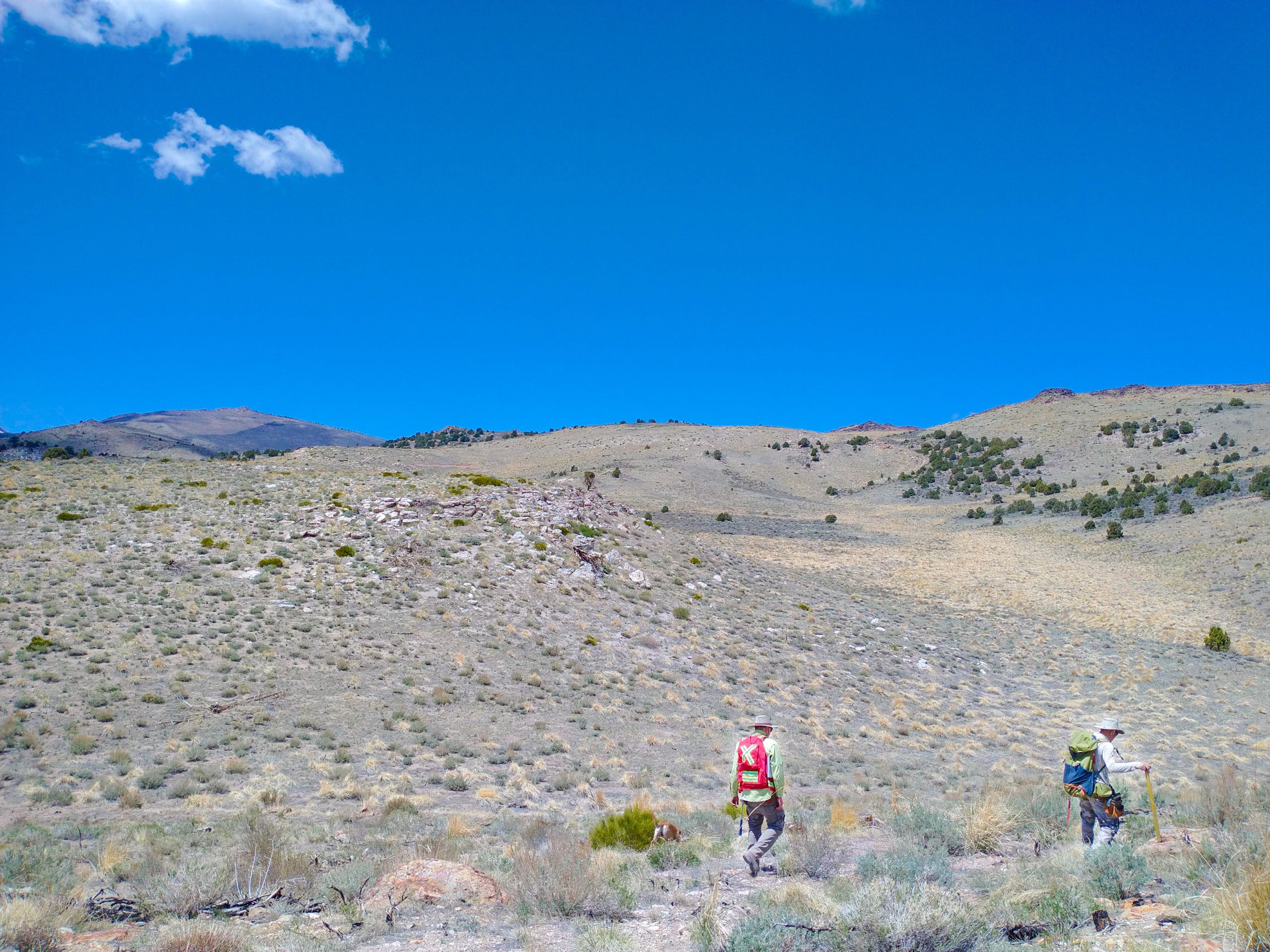
The Most Expensive Part of Exploration
Investors often imagine drilling as the decisive moment in mineral discovery.
In reality, the drill rig arrives near the end of a much longer process.
Before a single hole is drilled, geologists must acquire ground, map structures, sample rocks and decide which targets deserve scarce capital.
Most fail.
The traditional junior finances that uncertainty through repeated equity raises.
That works well when speculative capital is abundant. It becomes destructive when markets close.
A weak share price forces the company to issue more shares for every dollar raised. Existing investors gradually own a smaller proportion of the same assets. Management becomes more concerned with financing the next season than generating the next discovery.
By the time geological success arrives, much of the economic benefit may already have been diluted away.
Headwater’s model attempts to separate corporate survival from the result of any single drill programme.
It continues funding selected projects internally. Other targets are advanced through staged agreements under which major producers earn ownership by paying for exploration.
Headwater gives up part of the project.
In exchange, it avoids carrying the full cost of finding out whether the project works.
Exploration Is a Portfolio Business
Rick Rule has often argued that exploration is a probabilities business.
Most prospects fail.
The mining industry continues encouraging investors to behave as though conviction can overcome this mathematics.
A company acquires one flagship asset. Management presents a large conceptual target. Shareholders begin calculating what the discovery could be worth before enough holes have been drilled to establish whether it exists.
Every subsequent result carries enormous weight because the company has nowhere else to turn.
A portfolio changes the experience.
One failed target remains disappointing. It does not necessarily destroy the investment case.
Capital can move towards the strongest geological evidence. Projects can be advanced, partnered, sold or abandoned. The company’s technical knowledge compounds across multiple programmes rather than being trapped inside a single property.
Headwater describes itself as a hybrid explorer because it has resisted becoming a pure prospect generator.
It still keeps wholly owned projects.
This preserves the possibility of retaining full ownership when the company believes the target is manageable with its own capital. Partner funding is used where the scale of exploration would otherwise become impractical.
The balance is deliberate.
Giving away too much of every project can leave shareholders with limited exposure when discovery finally arrives. Funding everything internally creates the opposite problem. The company may own every asset while repeatedly diluting the shareholders who paid to explore them.
Headwater sits between those extremes.
Its partners carry large exploration budgets.
The company retains minority project interests, royalties, management income and a pipeline of projects outside those agreements.
Why Major Miners Need Juniors
The relationship works both ways.
Major producers face a simple problem. Every ounce mined today has to be replaced tomorrow. Organic discoveries have become rarer, while buying advanced projects has become increasingly expensive.
Funding capable juniors offers a cheaper and often more flexible route to discovery.
The junior supplies the geological ideas, field team and willingness to work on targets too early for a major company’s development pipeline. The producer supplies the capital required to test those ideas properly.
Earn-in stages protect the major from committing too much too soon.
If the geology disappoints, it can walk away.
When results improve, the company can increase its ownership before the project becomes strategically valuable to competitors.
Each earn-in becomes an option on a potential discovery rather than a commitment to build a mine.
The producer pays for more information.
The junior retains a meaningful interest in the discovery.
Similar agreements with OceanaGold and Centerra allow Headwater to advance several additional projects using partner-funded exploration budgets measured in the tens of millions of dollars.
These are substantial commitments beside the market value and treasury of a typical junior explorer.
They allow several projects to move forward at once.
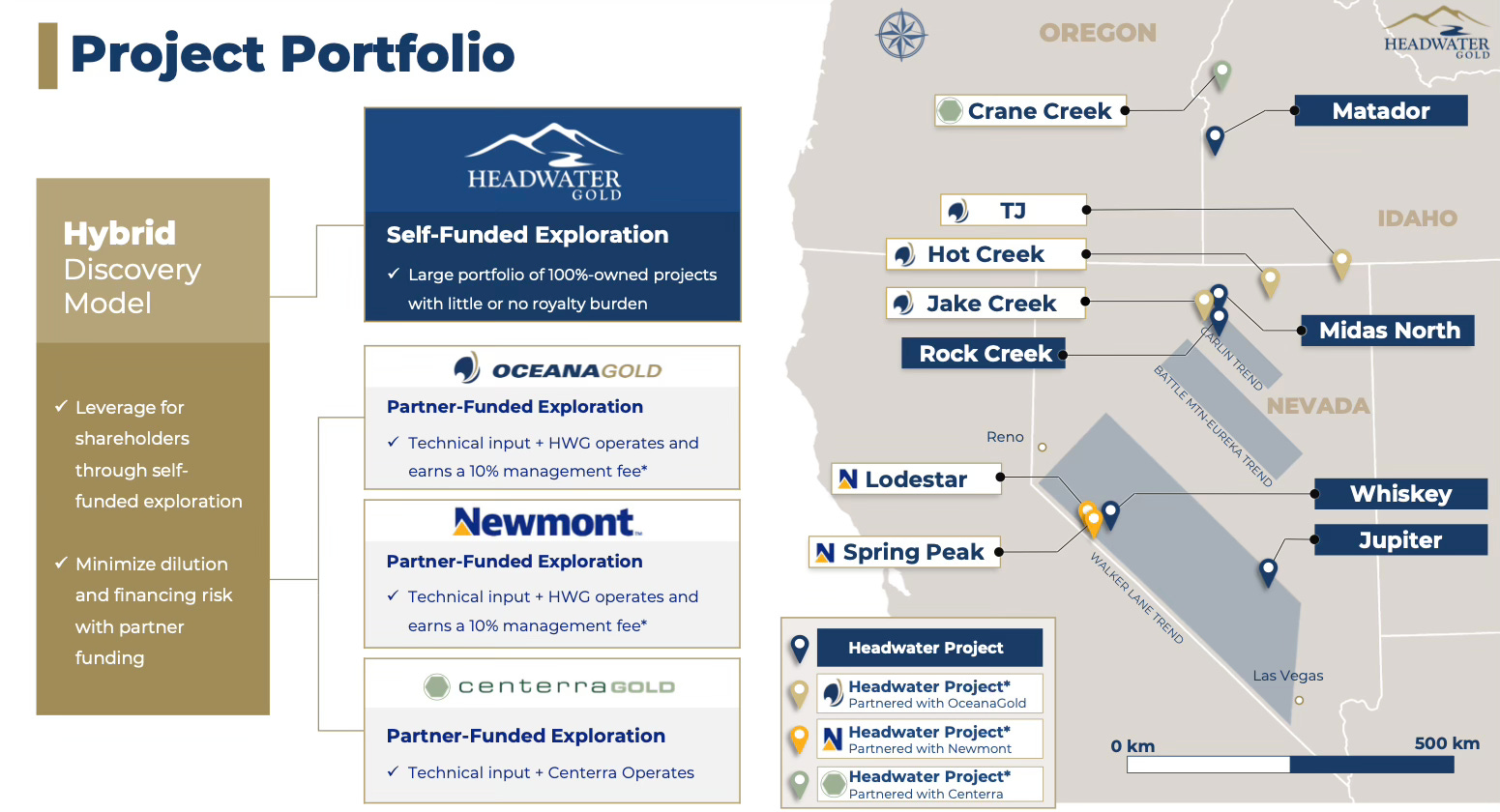
Why Newmont Is Spending at Spring Peak
Headwater's portfolio already demonstrates how this approach works in practice.
Spring Peak offers the clearest example.
Newmont isn’t buying a story.
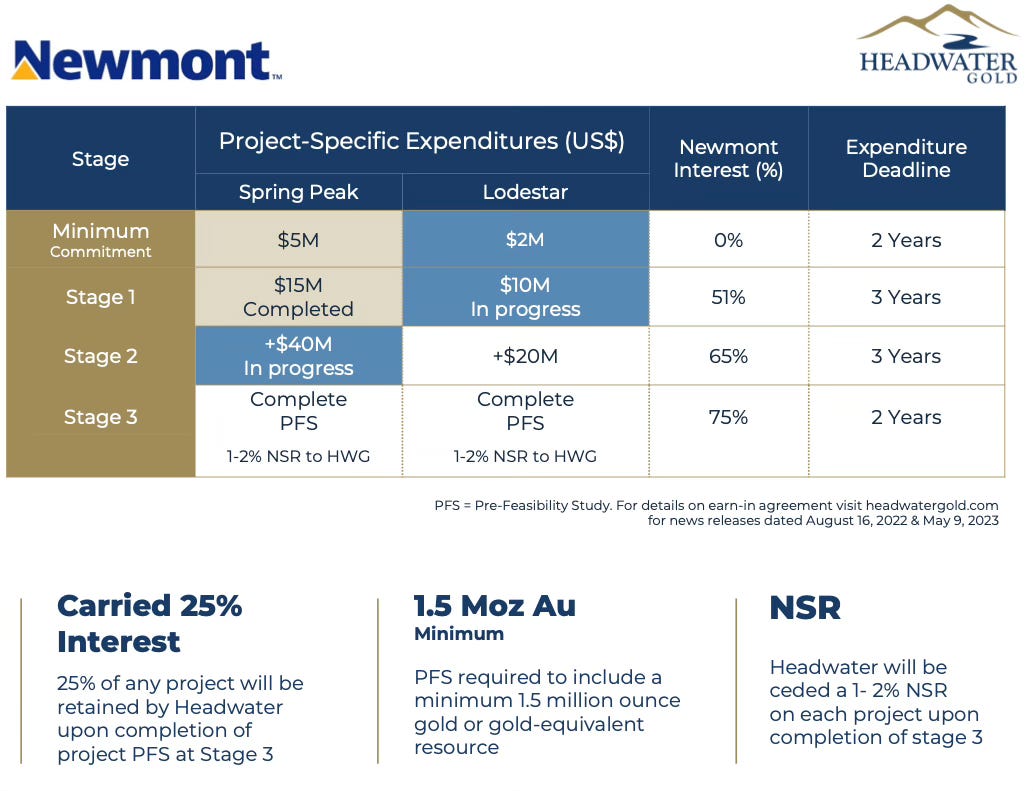
It’s allocating another US$40–55 million of capital after its own technical teams have already spent years evaluating the project. Meanwhile, Headwater retains meaningful exposure to any discovery.
For a junior explorer, a programme of that scale would normally require repeated trips to the equity market. Headwater instead retains exposure while Newmont funds the expensive work needed to establish the size and continuity of the system.
The arrangement has already moved beyond a speculative first look.
Newmont completed the initial earn-in following the discovery of the high-grade Disco Zone, encouraging results at the Shadow target and the identification of further targets across the wider property.
Its decision to continue carries weight.
Major producers examine countless projects. Their technical teams have seen enough attractive presentations, selective drill sections and promotional geological models to know how easily early excitement can disappear underground.
Newmont’s continued spending does not guarantee a mine.
It does show that Spring Peak has survived several layers of technical scrutiny and earned another substantial allocation of capital.
For Headwater shareholders, the work continues without the company being forced to finance a US$40 million exploration commitment itself.
That is the model operating as intended.
Dilution Is a Geological Risk
Dilution is usually treated as a financing issue.
For exploration companies it eventually becomes a geological one.
A company may discover more ounces while each shareholder owns less of them.
Partner-funded drilling cannot eliminate financing needs, but it materially reduces the amount of equity Headwater must issue simply to keep several projects moving.
During strong markets dilution is easy to ignore because rising share prices disguise it. Over an entire commodity cycle, ownership usually matters more than optimism.
Grade Is Still the Judge
Financial engineering cannot rescue poor geology.
A clever earn-in agreement attached to a weak project remains a weak project.
Headwater’s portfolio is concentrated on high-grade epithermal systems across Nevada, Oregon and Idaho. Its stated philosophy is blunt: Grade is King.
This focus suits the partnership structure.
High-grade discoveries can create substantial value from relatively compact systems. They are also technically demanding. Veins can be narrow, structurally controlled and difficult to trace beneath cover.
Testing them properly may require many holes before the geometry becomes clear.
A thinly financed explorer can stop drilling at precisely the moment when the geological model begins improving.
A well-funded partner can continue.
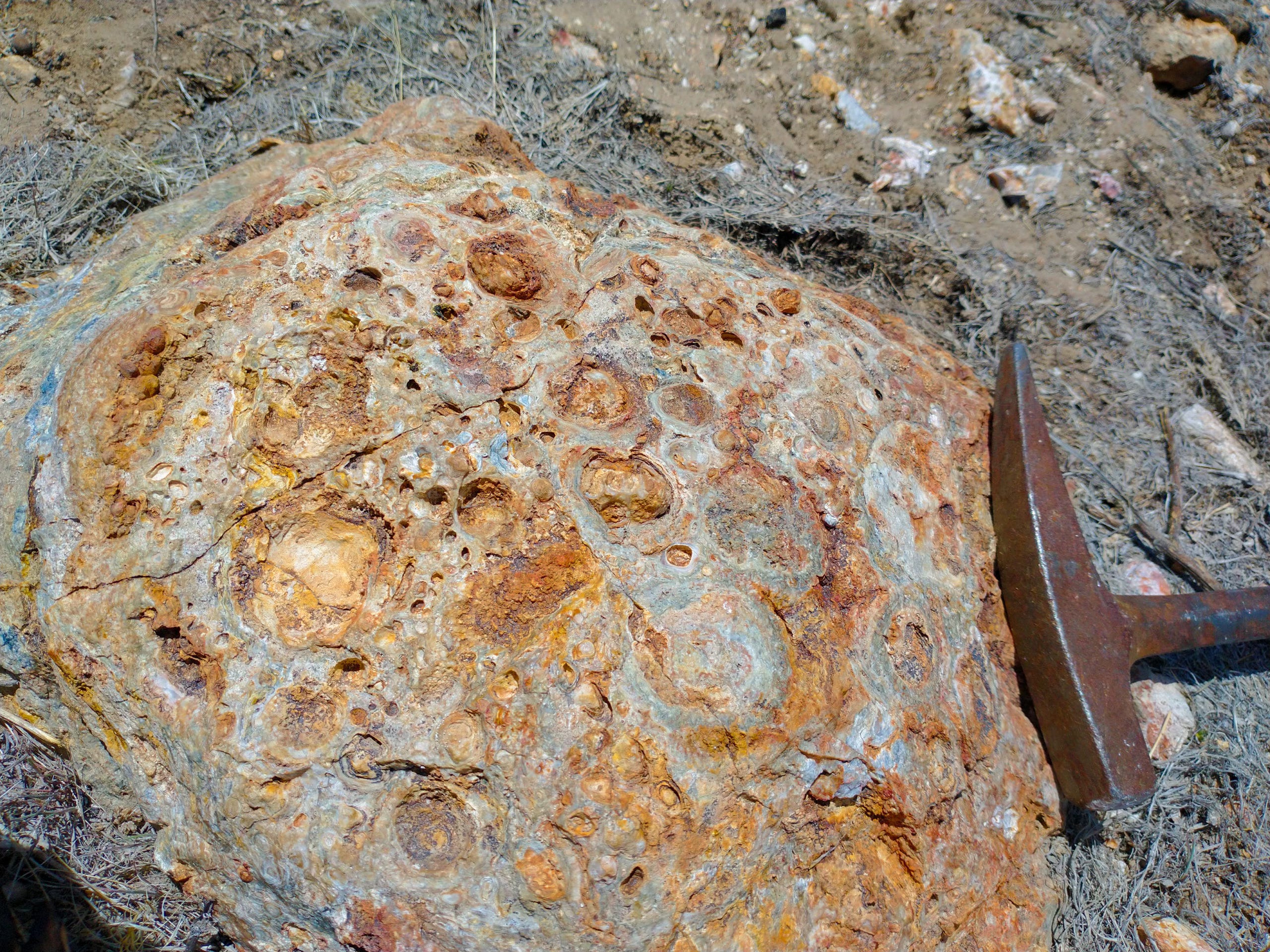
Spring Peak demonstrates why that patience matters. The first discovery does not finish the job. It creates a new set of questions concerning continuity, depth, parallel structures and the size of the surrounding system.
Those questions require capital.
Newmont has agreed to provide it.
Financing improves the odds of discovery. It does not create discovery. Every earn-in agreement, every funding structure and every royalty eventually leads back to the same question. Is there an economic deposit beneath the ground?
The Value of Staying Alive
Junior mining investors naturally spend most of their time looking for the project capable of transforming a company.
Headwater invites a different question.
How do you build a business that survives long enough to make that discovery?
Its technical team continues generating new opportunities across Nevada, Oregon and Idaho. Some remain wholly owned. Others are partnered with producers prepared to commit tens of millions of dollars to exploration. Together they create a business that is less dependent on the outcome of any single drill campaign than many of its peers.
There will still be failed holes and disappointing assays. No financing model can eliminate geological uncertainty.
That is simply the nature of mineral exploration.
The companies that create lasting value are rarely those that avoid failure altogether.
They are the ones that remain well funded enough to keep searching after the failures arrive.
More than a century ago, the best oil wildcatters understood this instinctively. No individual well justified blind conviction. Success came from drilling enough of the right wells, preserving capital and allowing probability to work over time.
Headwater has built its business around much the same principle.
It cannot guarantee discovery.
No exploration company can.
What it can do is change the odds.
Disclosure: This article has been commissioned by Headwater Gold (CSE: HWG). The views expressed are that of Matt Oliver, Oliver Market Intelligence and reflect his own analysis. This article is provided for informational purposes only and does not constitute financial or investment advice. Investments are inherently speculative and involve risk, including the loss of capital.
Hi I was trying to chat you Oliver but my message is not going through