



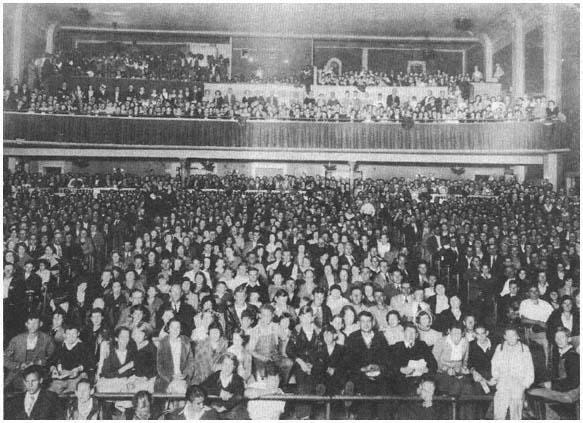
In the early 1900s, travelling theatres would sometimes oversell tickets intentionally.
Owners understood a simple truth about human behaviour. Not everybody arrived at the same time. Some cancelled. Some arrived late. Others never showed up at all.
As long as enough seats remained empty, nobody noticed.
Then came the night when everybody arrived.
Suddenly, the theatre had more ticket holders than seats. Nothing had physically changed inside the building. The problem was that too many claims had been issued against something finite.
The silver market has spent decades doing much the same thing.
Enormous quantities of silver exposure trade through futures, forwards and unallocated accounts without anything close to the same quantity of physical metal changing hands. Normally that works perfectly well. Most traders want exposure to the price, not pallets of 1,000-ounce bars.
The problem begins when more of them want the bars.
That is where the silver market is heading now.
The Market Behind the Price
Most investors think of silver as a single market.
It isn’t.
Two of its most important centres operate through COMEX in New York and the London bullion market centred around the LBMA. COMEX is dominated by standardised futures contracts traded through an exchange and clearing system. London relies heavily on over-the-counter forwards and unallocated accounts.
In both markets, financial claims dwarf the amount of silver that actually changes hands.
A hedge fund can buy a futures contract because it expects silver to rise. A miner can sell one to hedge future production. A bank can intermediate between the two. Before expiry, positions can be closed or rolled into another contract.
No silver needs to leave a vault.
London takes the abstraction further. An investor holding allocated silver owns specific metal. An unallocated holder instead has a claim against a bullion bank for a quantity of silver without specific bars necessarily being segregated in their name.
The structure created deep liquidity, but it also allowed financial claims to grow far beyond the metal immediately available to settle them.
COMEX Has Two Kinds of Silver
COMEX makes the imbalance unusually easy to see.
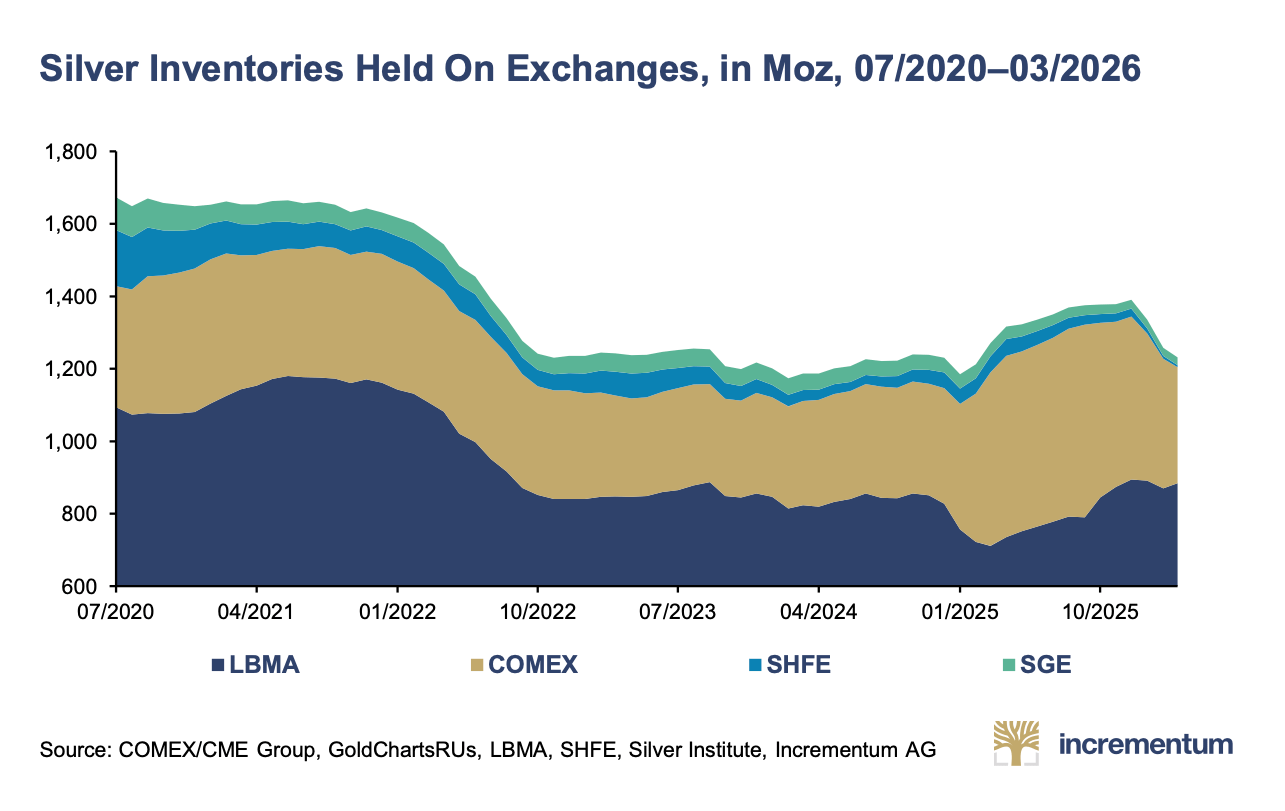
A standard silver futures contract represents 5,000 troy ounces. Across tens of thousands of outstanding contracts, that represents hundreds of millions of ounces of silver.
But not all silver sitting inside COMEX-approved warehouses is actually available for delivery.
The difference is between eligible and registered inventory.
Eligible silver meets COMEX specifications and sits inside an approved warehouse, but it already belongs to somebody. Registered silver has the appropriate warrant attached and can be delivered against futures contracts.
Imagine looking through the theatre window and counting 500 chairs.
That tells you how many chairs are in the building.
It does not tell you how many are available.
The amount of silver represented by outstanding futures contracts can vastly exceed the registered inventory immediately available to settle them.
The system works because almost nobody asks for delivery.
The Short Squeeze Changes the Equation
Price only tells part of the story.
A heavily leveraged futures market functions smoothly while traders continue closing positions financially. Short sellers can sell contracts, roll them forward and eventually repurchase them without ever touching the underlying commodity.
This changes when physical supply tightens underneath them.
A short seller facing a rising silver price eventually needs to buy back the contract or provide sufficient collateral to maintain the position. An industrial buyer facing a shortage has a different problem. It needs the actual metal.
Both become buyers.
One is trying to escape a financial position. The other is trying to secure physical supply.
That is the squeeze.
The futures market can create additional financial exposure almost instantly. It cannot create another 100 million ounces of refined silver.
Once financial and physical demand pull in the same direction, leverage amplifies the move.
London Has the Same Problem
Unallocated silver works because bullion banks do not need to place a specific bar aside for every ounce represented by customer accounts. If a customer wants allocation, the institution must source the corresponding physical metal.
Banks can draw on their own inventory, acquire metal from other institutions, source bars from refiners or move silver between trading centres.
If enough unallocated holders request allocation simultaneously, banks begin competing for the same pool of physical silver. Premiums rise. Metal moves between markets. Settlement becomes more difficult.
The difference between a silver claim and a silver bar then acquires a price.
It starts acquiring a price.
Eventually Someone Wants the Metal
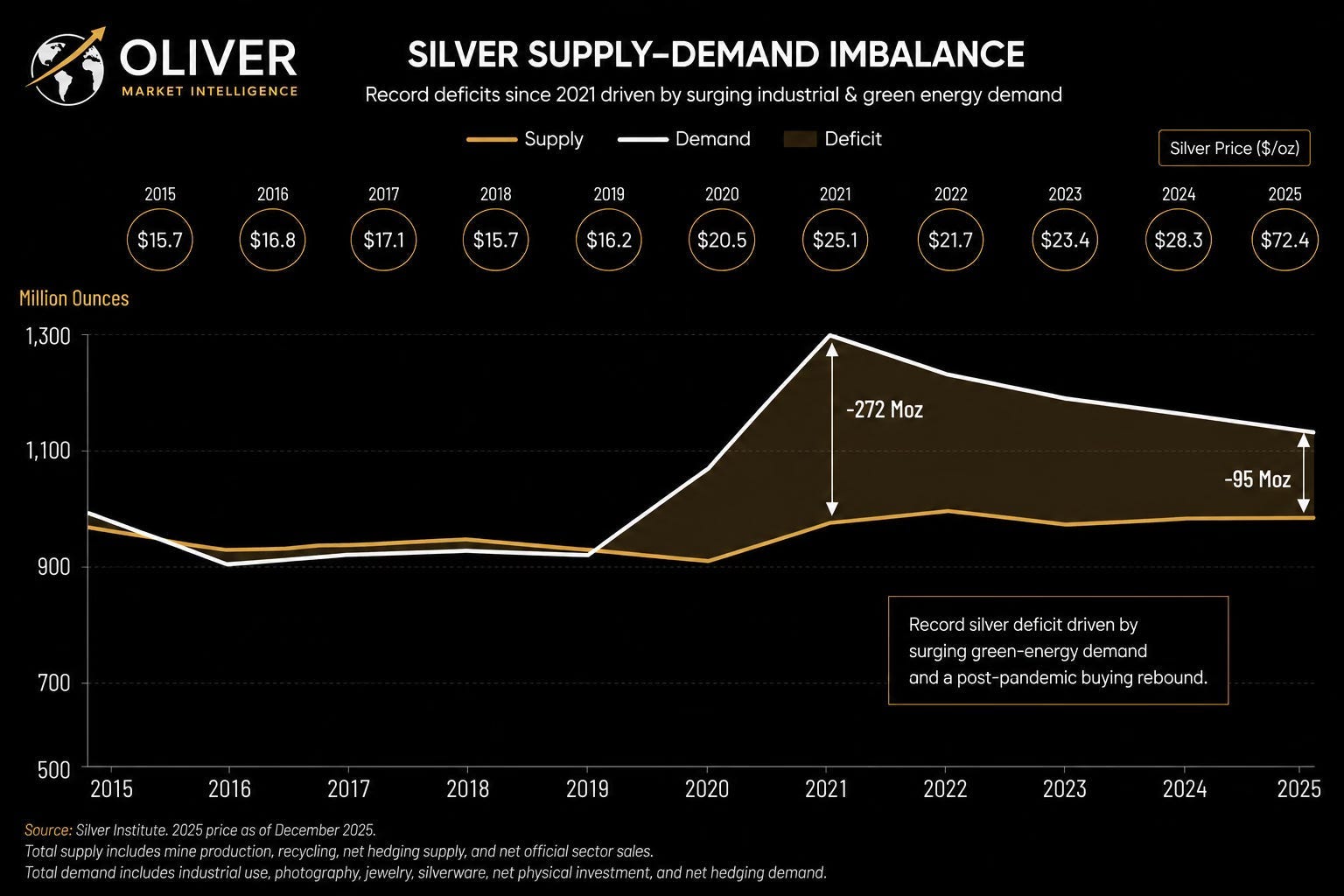
Silver cannot be reduced to a financial market because industry consumes it.
Solar panels require silver. So do electronics, vehicles, electrical infrastructure and semiconductor applications. Silver’s conductivity makes it difficult to replace in applications where performance matters.
A hedge fund buys silver because it expects the price to rise.
A manufacturer buys silver because production eventually stops without it.
The first buyer can change its mind.
The second has considerably less freedom.
Supply cannot respond at the same speed. Much of the world’s silver arrives as a by-product of copper, lead and zinc mining, meaning a higher silver price does not automatically produce an immediate increase in output.
Financial claims can multiply in seconds.
Mines take years.
The mismatch can persist while physical delivery remains marginal. It becomes dangerous when industrial users, investors and short sellers compete for the same ounces.
When Price Becomes Access
The London Metal Exchange discovered how quickly this can happen with nickel in 2022.
Nickel prices exploded from around $25,000 per tonne to above $100,000 intraday as a huge short position collided with a rapidly tightening market. The LME suspended trading and cancelled billions of dollars of transactions.
Silver is not nickel. COMEX is not the LME.
The mechanics of a leveraged short squeeze are much the same.
Short positions appear manageable while liquidity is plentiful. Then the market moves against them, margin requirements rise and traders discover that everybody wants through the same exit.
In silver, that exit sits beside a physical market already serving manufacturers that cannot settle their requirements with a futures contract.
The useful signals sit beneath the headline price.
Registered inventories. Physical premiums. Delivery volumes. Futures spreads. Allocation requests. Settlement times. Metal moving between London, New York and Asian markets.
Together, they show whether silver is becoming expensive or scarce.
The second is far more dangerous for shorts.
When Everybody Arrives
The theatre could oversell seats because experience told the owner most ticket holders would behave predictably.
The silver market rests on the same idea.
Most futures traders will not demand delivery. Most unallocated holders will not request specific bars. Most positions will be closed, rolled or settled financially. Physical silver therefore does not need to exist in quantities remotely approaching total financial exposure.
Until behaviour changes.
A short squeeze does not require every futures contract to demand delivery. It only requires enough physical demand to tighten the available float while enough leveraged sellers are forced to buy back positions.
For years, the physical market sat beneath a much larger financial market without causing problems because hardly anybody asked to see the seats.
Now more people are arriving at the theatre.
The tickets are still trading.
The number of chairs isn’t.
If you are thinking about how to protect your wealth in this environment, you can explore physical gold and silver through www.goldwise.com, where the focus is on ownership, security and transparency.
Goldwise is committed to producing educational content that helps investors better understand the macroeconomic forces shaping financial markets. If there are topics you would like us to explore in future editions, we welcome your feedback.
Disclosure: Mr. Matthew Oliver, Oliver Market Intelligence, is a Goldwise shareholder. Any opinions, analysis and views expressed in this publication are solely those of Mr. Matthew Oliver, Oliver Market Intelligence and are provided independently unless expressly stated otherwise.
This publication is provided for informational and educational purposes only and does not constitute financial, investment or other professional advice. References to Goldwise are for informational purposes and should not be construed as a recommendation to purchase any product or service. Investments can fall as well as rise in value, and readers should conduct their own research and, where appropriate, seek advice from a qualified financial adviser before making any financial decisions.