


The Steel Nobody Wanted to Own
In the early 2000s, Chinese steel production grew so aggressively that entire industrial sectors across the West simply stopped believing domestic manufacturing mattered anymore. Blast furnaces shut down. Towns hollowed out. Investors treated steel equities like melting ice cubes. Cheap foreign supply became a permanent assumption baked into global markets.
The strange thing about systems built around permanent assumptions is how violently they react once those assumptions fail.
For nearly two decades, globalisation trained investors to think in abstractions. Software scaled better than factories. Platforms mattered more than production. Physical industry became associated with low returns, labour disputes, pension liabilities, and commodity volatility. Capital migrated accordingly.
But the world underneath those assumptions kept changing.
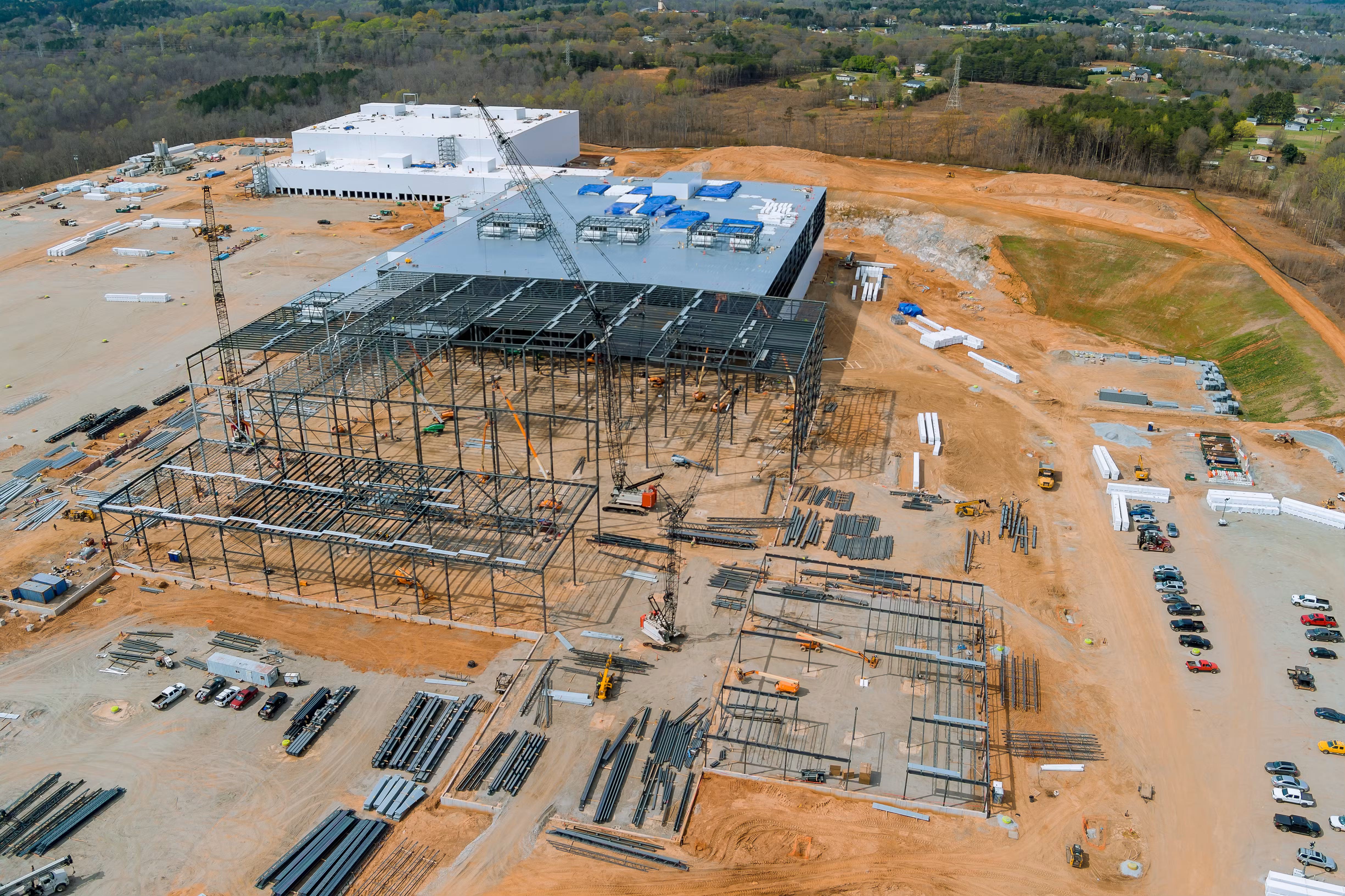
Data centres still required structural steel. Electrical grids still required transmission towers. Wind turbines still consumed enormous quantities of fabricated metal. Semiconductor plants, LNG terminals, logistics warehouses, naval shipbuilding programmes, battery factories, rail infrastructure, and reshoring initiatives all demanded physical materials at staggering scale.
The market simply stopped looking closely enough to notice.
Steel became psychologically invisible despite remaining foundational to almost every major industrial trend shaping the next decade. Investors spoke endlessly about artificial intelligence while ignoring the industrial shell required to power it. The AI buildout itself is deeply physical. Hyperscale infrastructure consumes immense quantities of steel before a single chip even becomes operational.
The problem is that supply chains are no longer operating inside the political framework that defined the post-Cold War era.
The old system depended on abundant cheap energy, unrestricted trade flows, low geopolitical friction, and the assumption that efficiency mattered more than resilience. Those conditions are deteriorating simultaneously.
And steel sits directly in the middle of the fracture.
When Industrial Capacity Becomes Strategic Again
Governments rarely care about commodity industries until they suddenly do.
The United States spent decades tolerating the gradual erosion of domestic industrial capacity because imported supply remained cheap and politically convenient. That tolerance faded sharply after the pandemic exposed supply chain fragility and geopolitical tensions intensified across multiple regions simultaneously.
Steel moved from being treated as a cyclical commodity to something much closer to strategic infrastructure.
That transition accelerated dramatically once Section 232 tariffs expanded and hardened into a more durable trade regime. The return of broad 50% tariffs on imported steel effectively redrew the economics of the American market. Foreign producers could still access the US, but the barrier became materially higher and harder to circumvent.
Markets still seem oddly reluctant to fully price what this means.
For decades, domestic steel producers operated under constant pressure from global oversupply. Strong pricing periods rarely lasted because cheap imports quickly flooded the market and crushed margins. Capital discipline barely mattered if external supply could permanently undercut domestic economics.
That environment is changing.
The United States increasingly resembles a protected industrial basin where domestic steelmakers enjoy structurally stronger pricing power than they did during the peak globalisation years. This does not eliminate cyclicality. Steel remains cyclical by nature. But the floor beneath the industry appears materially higher than before.
The shift becomes even more interesting when viewed against global supply dynamics.
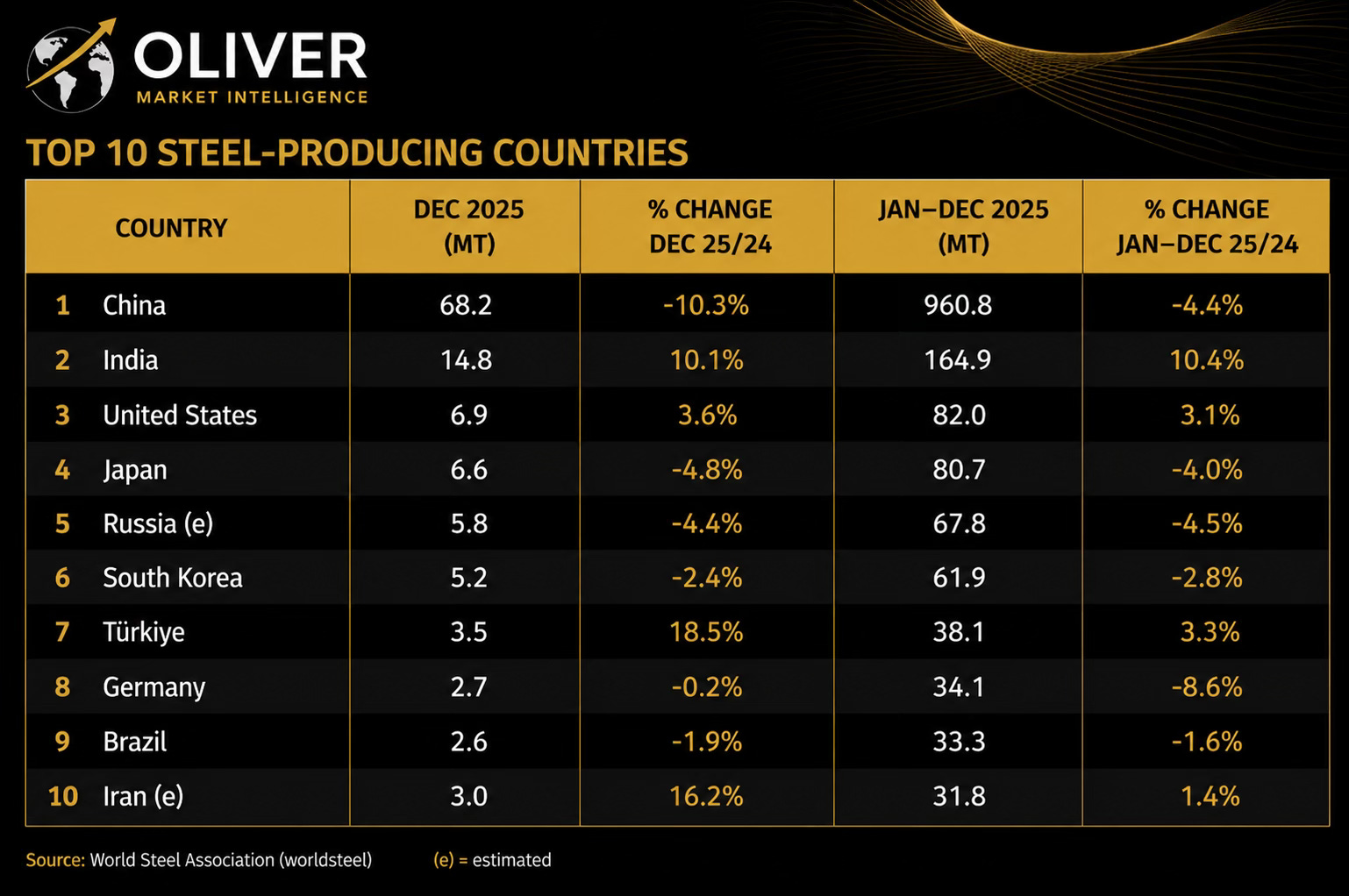
China still dominates global steel production, accounting for more than half of worldwide output, but its domestic property slowdown created enormous excess supply that spilled into export markets. Meanwhile, energy disruptions, trade fragmentation, and geopolitical conflict have complicated production economics across multiple regions simultaneously.
The global steel market increasingly looks less like a frictionless commodity exchange and more like a collection of semi-protected regional systems competing for industrial security.
That has profound implications for investors willing to move beyond the outdated narrative framework surrounding steel.
The Quiet Return of the Physical Economy
One of the stranger features of modern markets is how often investors confuse visibility with importance.
Software businesses became highly visible because they scaled quickly and generated extraordinary margins. Heavy industry faded into the background because it looked old, dirty, and economically unfashionable. Yet physical systems still underpin nearly every aspect of the modern economy.
The energy transition itself depends heavily on steel intensity.
Wind turbines require hundreds of tonnes of steel for towers, foundations, and nacelles. Grid expansion consumes enormous volumes of structural and electrical steel products. Industrial reshoring requires factories, warehouses, transport infrastructure, and energy systems. Even the transition towards electrification increases demand for industrial materials rather than reducing it.
There is also a growing mismatch between future infrastructure ambitions and current industrial capacity.
Western governments increasingly want domestic production, resilient supply chains, defence expansion, energy security, and technological sovereignty. Achieving those goals requires large-scale physical investment over many years. The political rhetoric surrounding reshoring and industrial renewal is now colliding with the reality that rebuilding industrial ecosystems takes time and enormous quantities of raw materials.
Steel producers sit near the centre of that process.
And yet many investors still approach the sector as though nothing fundamentally changed after 2015.
Markets have been slow to adjust to what this shift actually means.
Paywall
The rest of this article explores why I believe Nucor sits in one of the strongest strategic positions in the entire North American industrial system, why the market still misunderstands the durability of the US steel trade wall, and why the company increasingly resembles a long-duration industrial compounder rather than a traditional cyclical steel producer.
Subscribers can continue reading below.
