


In 1849, thousands of people crossed oceans, deserts and mountain ranges chasing gold in California.
Most of them failed.
A handful became rich, though not always in the way the newspapers imagined. Some of the best fortunes were made by people selling picks, shovels, timber, rail transport, lodging and food to the men convinced they were one riverbed away from freedom.
Gold was the spectacle. Infrastructure was the business.
That old lesson has a strange relevance now.
The modern gold rush does not look like men kneeling in cold water with pans. It looks like data centres outside Phoenix, battery factories across the American South, transmission lines creeping across rural land, defence contractors ordering more electronics, utilities trying to rebuild grids designed for a different age.
Investors mostly argue about the visible winners. Which AI company dominates. Which electric vehicle manufacturer survives. Which battery chemistry scales. Which power developer captures the bottleneck.
Yet underneath all of it sits a less glamorous material requirement that refuses to go away.
Copper.
The metal is too familiar to feel exciting. It sits inside walls, substations, cooling systems, electric motors, switchgear, transformers, military hardware and the arteries of the grid. Oil announces itself every time someone fills a car. Copper disappears into the system and only becomes visible when there is not enough of it.
That is the uncomfortable part of the current cycle. The world has become very good at inventing new sources of copper demand and very slow at bringing new copper mines into existence.
Somewhere inside that mismatch sits a historic mining district in northern California that the market still seems determined to treat as a jurisdictional problem before it treats it as a copper asset.
The District That Slipped Out Of View
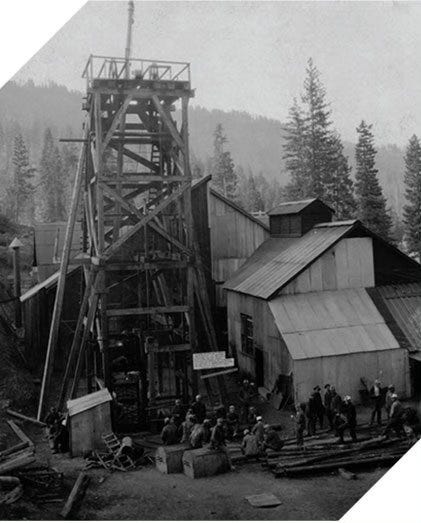
Long before copper became a line item in energy transition models, the Lights Creek district in Plumas County was already producing it.
Between 1915 and 1930, the Engels and Superior mines produced more than 161 million pounds of copper, with silver and gold alongside it. The district had its own industrial rhythm: mines, rail links, workers, equipment, local commerce, and the kind of practical infrastructure that tends to appear wherever ore and capital meet for long enough.
Then the Depression arrived and the rhythm broke.
The easy version of mining history says districts close because the ore is gone. Sometimes they do. Sometimes capital leaves first. Sometimes the commodity price collapses. Sometimes a banking crisis does more damage than geology ever could.
Lights Creek belongs closer to the second category.
The mining stopped. The copper did not.
Decades later, Placer-Amex returned with modern exploration tools and began drilling across the district. Its work helped define the Moonlight deposit and showed that the old producing mines were only part of a much larger system.
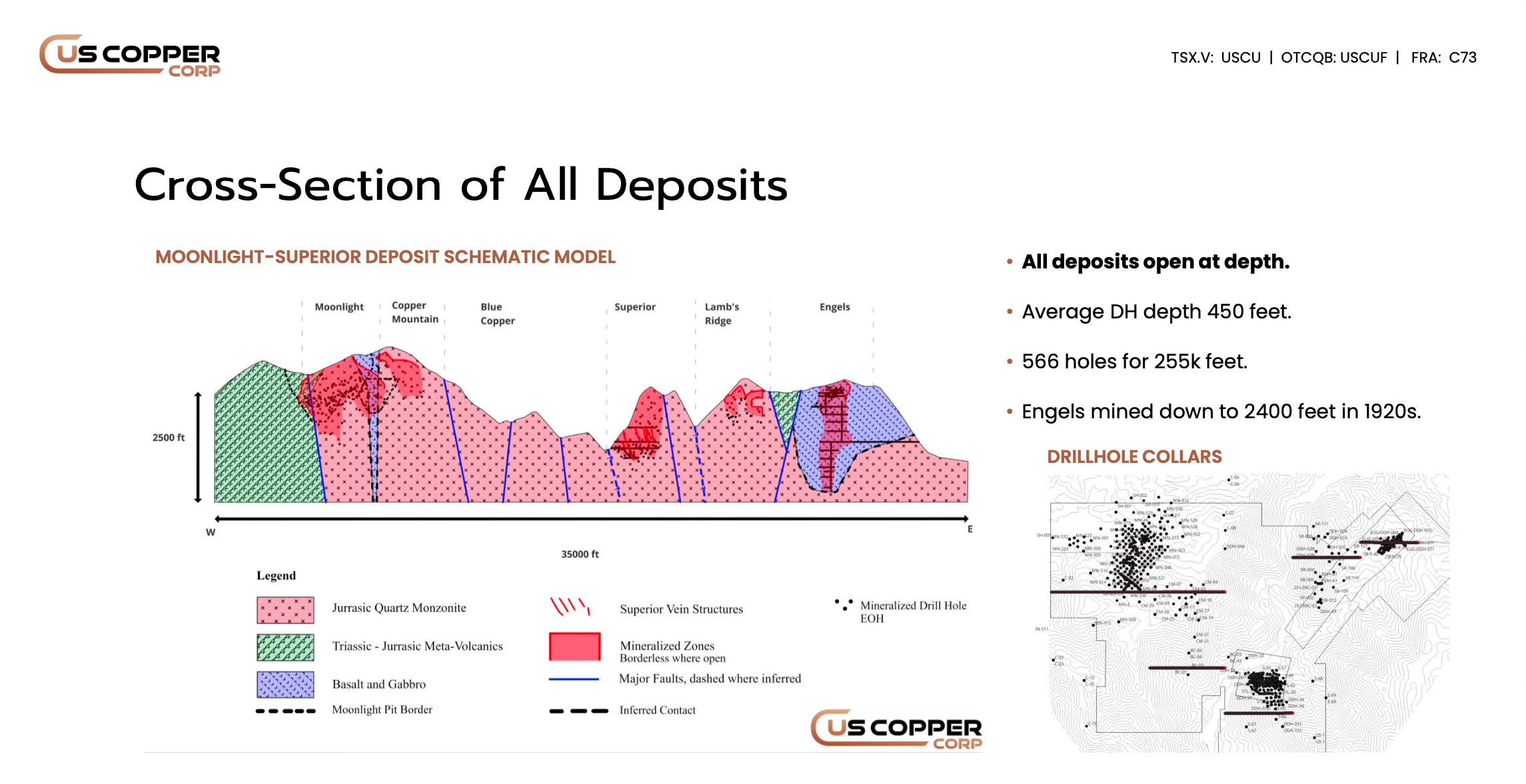
That is the part of the story the market tends to miss. Moonlight-Superior is not a speculative patch of ground with a promotional name and a few promising drill holes. It is a large copper system sitting inside a district that has already produced copper, already supported mining infrastructure and already attracted serious historical exploration.
US Copper now controls the Moonlight-Superior Copper Project through 36 patented claims and 330 federal claims across roughly 10 square miles in the historic district.
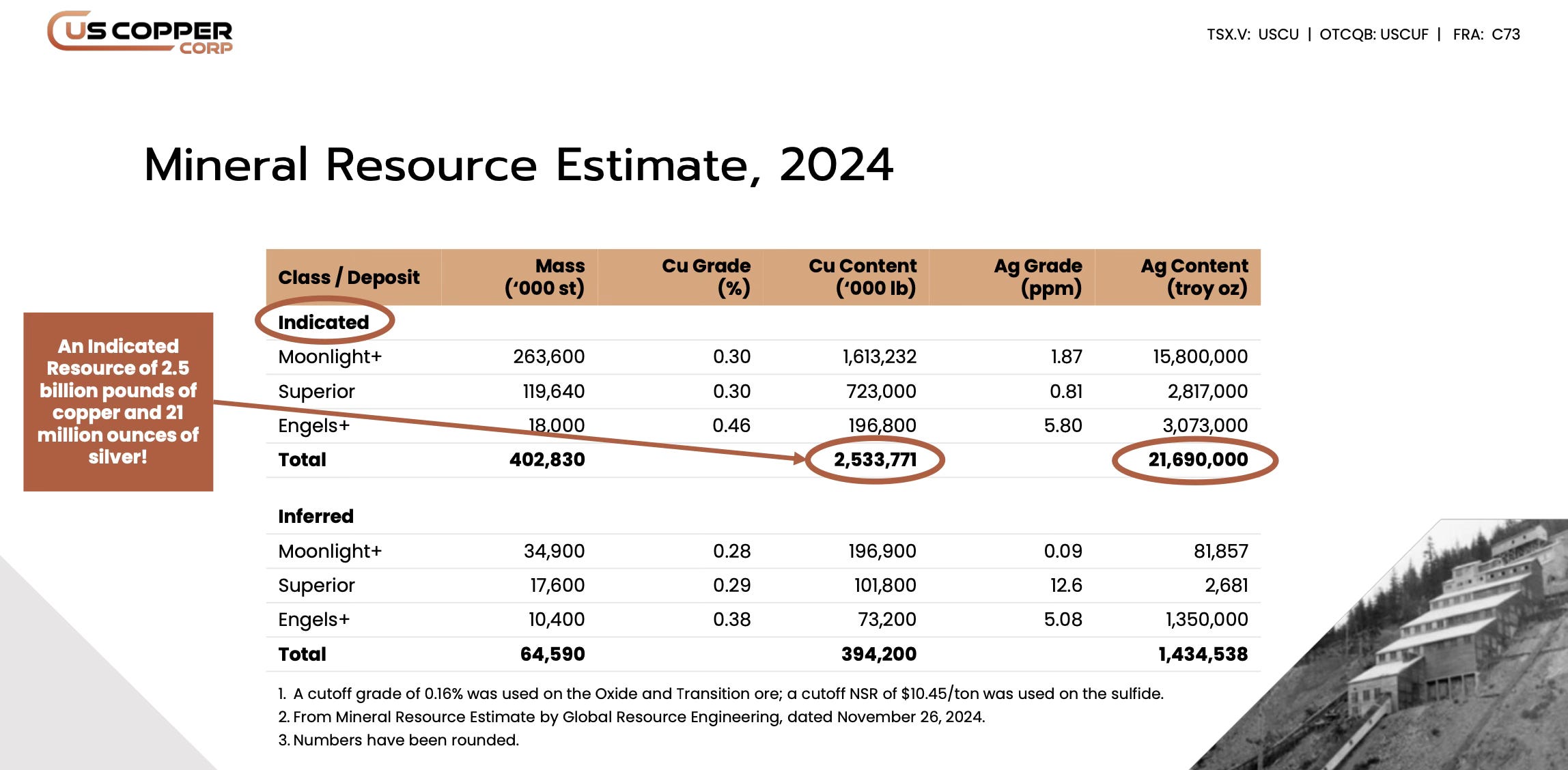
Current resources stand at roughly 2.5 billion pounds of indicated copper and a further 400 million pounds inferred. Including silver credits, the project contains approximately 3.2 billion pounds of copper equivalent.
For a junior company, those are not small numbers.
The market is behaving as though they are.
The Clock Runs Differently In Mining
Commodity investors have inherited a comforting assumption. When prices rise far enough, supply eventually arrives.
That framework still works in some markets. It becomes less reliable when the supply response takes longer than most investment horizons.
Copper has moved into that awkward territory.
A data centre can be built in a few years. Battery storage can be deployed quickly once capital is available. Transmission projects are difficult but still operate on political and engineering timelines that investors can understand.
A copper mine listens to another clock.
Discovery, drilling, resource definition, metallurgy, engineering, permitting, financing, construction, commissioning and ramp-up can stretch across a generation. By the time a major new mine enters production, the original discovery team may have retired and the commodity cycle that funded the early work may have come and gone twice.
This is why the current copper conversation feels different from a normal cyclical rally.
Demand is arriving from several directions at once. Electric vehicles use more copper than combustion vehicles. Renewable power requires transmission and distribution. Data centres require enormous electrical infrastructure before a single model is trained. Defence modernisation is full of electronics, cabling and power systems. The grid, which was once treated as background plumbing, has become central to the entire industrial project.
None of this guarantees higher copper prices in a straight line. Commodity markets enjoy humiliating neat stories.
But it does make the old assumption of easy supply response look tired.
The world keeps adding copper demand in increments measured in years.
The mining industry answers in decades.
When Discipline Starts Competing With Necessity
Mining executives rarely enjoy buying assets after prices have already moved.
Boards spend years promising discipline. They talk about returns, capital allocation, shareholder distributions and the mistakes of the previous cycle. Then reserve life starts shrinking. Development pipelines look thin. Governments begin asking awkward questions about domestic supply. Customers want long-term security.
At some point discipline starts competing with necessity.
That is usually when the cheque books come out.
Copper producers are moving towards that moment. Many have spent years repairing balance sheets after the excesses of the last cycle. Cash flow is stronger. Shareholders still want returns, but the industry cannot return capital forever while copper inventories become harder to replace.
Exploration alone is unlikely to solve the problem quickly enough. New discoveries are rare. Good jurisdictions are rarer. Large undeveloped copper projects in stable countries are rarer still.
So the sector begins doing what it often does when the organic growth cupboard looks thin.
It buys time.
This is the backdrop for the renewed interest in copper M&A across North America. Strategic stakes, joint ventures and acquisitions are no longer side stories. They are becoming part of how the industry deals with a supply problem that cannot be drilled away quickly.
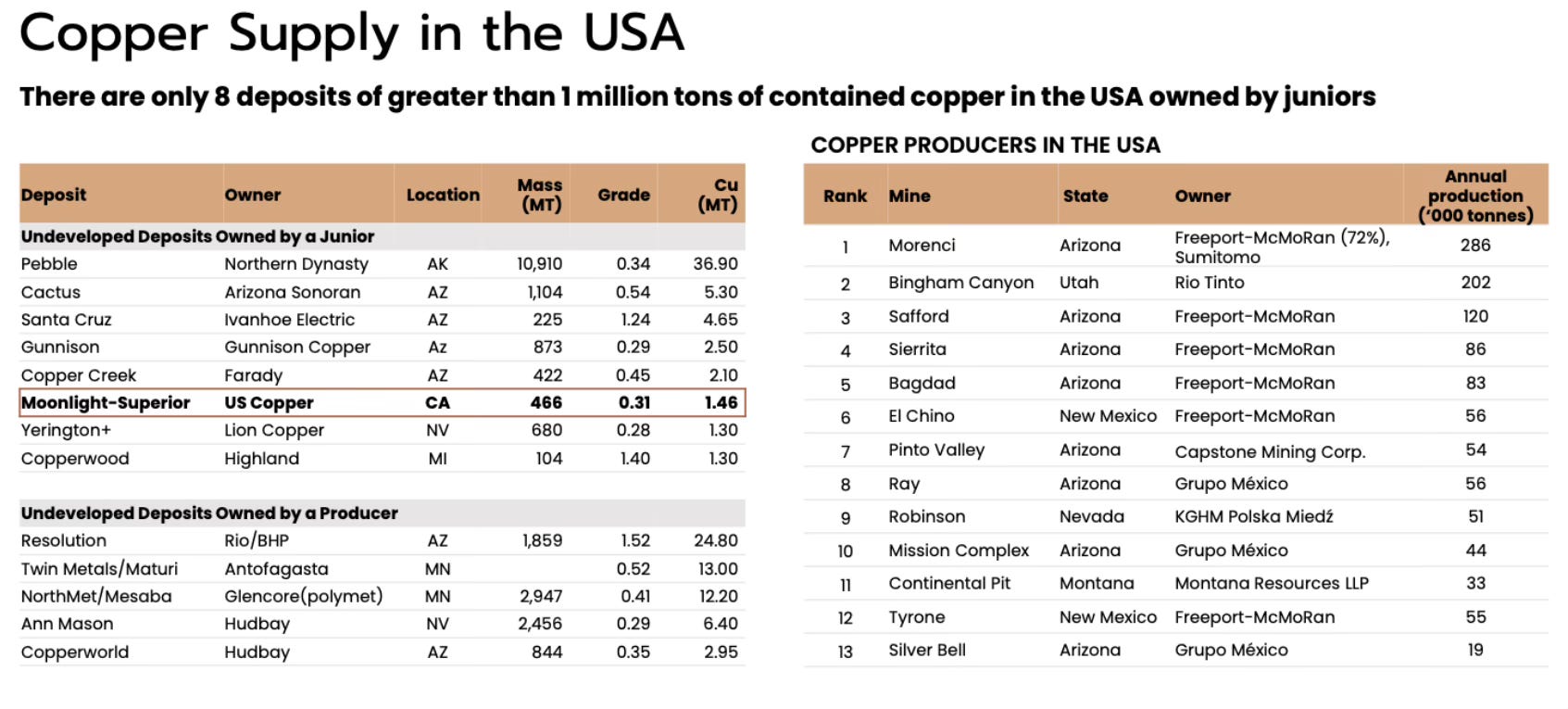
That matters for US Copper because Moonlight-Superior has one feature that many comparable copper stories no longer possess.
It remains unspoken for.
There is no Rio Tinto position. No Lundin Group cornerstone. No Orion-style financing partner shaping the future of the asset. No producer already owning 10 or 20 per cent and quietly controlling the strategic optionality.
The absence of a major backer has probably contributed to the discount.
It also leaves the door open.
The Word Investors Cannot Get Past
Every mining project has a word that defines the argument around it.
Sometimes it is grade.
Sometimes capex.
Sometimes water.
For US Copper, the word is California.
Management knows this. Investors know it too. The moment California appears in a mining discussion, many people reach for the same mental file: difficult permitting, long timelines, political opposition, environmental challenges.
There is enough truth inside that instinct to make it dangerous.
The problem is that the instinct has become too blunt.
Moonlight-Superior sits in a rural county with mining and logging history. It is approximately 100 miles north-west of Reno. State Highway 89 and rail are within seven miles, power lines are two miles south, and Sacramento’s deep-water port is around 150 miles away.
That does not remove the work required to advance a mine. It does make the project different from the simplified version of California mining that lives in many investors’ heads.
The federal land point is even more interesting.
US Copper’s management argues that the market has become fixated on the state label while underestimating the significance of federal claims and Washington’s growing focus on domestic critical minerals. Copper is no longer discussed only by mining analysts and commodity traders. It sits inside conversations about energy security, defence readiness, manufacturing policy and geopolitical resilience.
Those are not soft themes. They are becoming part of the political machinery.
For a project like Moonlight-Superior, that could matter. The question is not whether permitting risk exists. It does. The question is whether the market is applying a California discount so severe that it no longer reflects the actual asset, land position, history and policy context.
Right now the market appears to have made up its mind.
That is usually when mispricing becomes interesting.
The Numbers Are Too Large To Ignore Forever
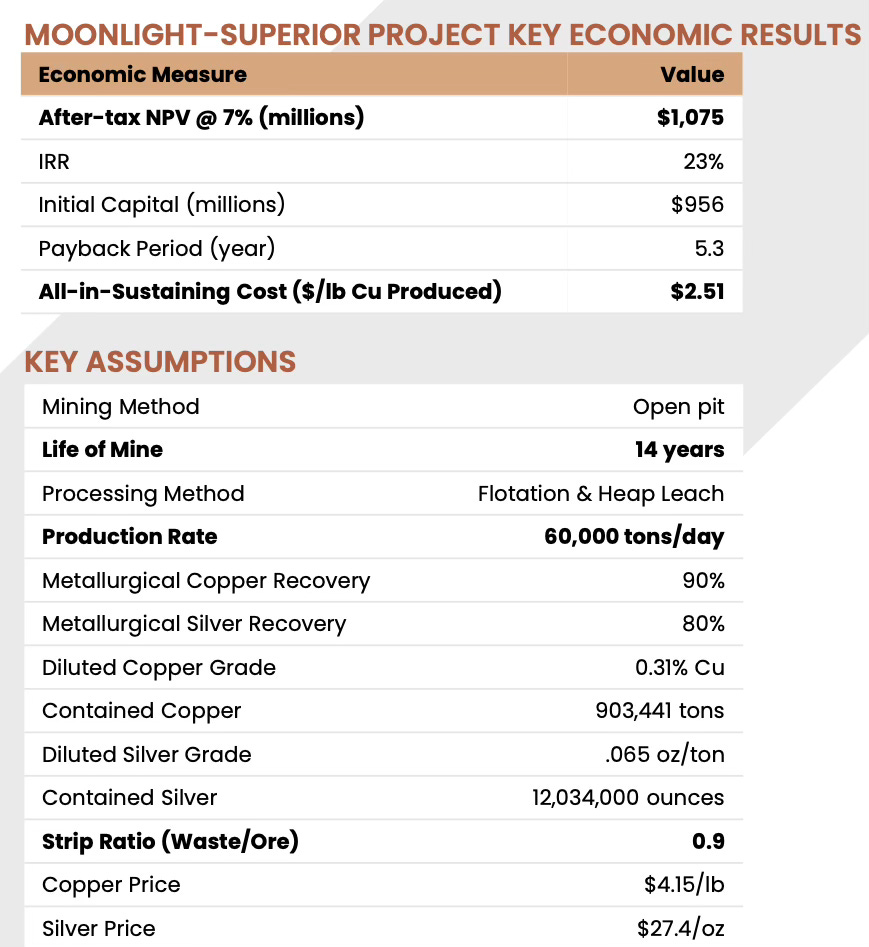
The 2025 Preliminary Economic Assessment gave Moonlight-Superior an after-tax NPV of approximately US$1.075 billion using US$4.15 per pound copper.
That copper price assumption now looks conservative relative to the market.
The project is still early. A PEA is not a feasibility study. Mineral resources are not reserves. Capital will be needed. Engineering work has to continue. Metallurgy, environmental studies, drilling and permitting all matter.
None of that should be waved away.
But risk is not the same thing as irrelevance.
The current valuation appears to be pricing Moonlight-Superior less like a large domestic copper resource and more like a marginal exploration story. That may prove justified if permitting stalls, copper weakens or technical work disappoints. Those are real risks.
Yet the asymmetry is difficult to ignore.
A project with billions of pounds of copper, meaningful silver credits, historic production, existing regional infrastructure and no strategic shareholder is sitting in a market where producers are becoming more desperate for long-life copper exposure.
One can dislike the jurisdiction and still recognise the scarcity value.
Sophisticated mining companies understand that distinction. They operate in countries with far greater political, legal and security risks than California. They build in deserts, jungles, mountains and conflict-prone regions because the ore body is worth the trouble.
If copper becomes scarce enough, the market may begin judging Moonlight-Superior less by the map label and more by the resource.
The Map May Be The Mistake
The most interesting investment cases often begin as category errors.
A company is placed in the wrong bucket. A jurisdictional label overwhelms the asset. A cyclical commodity becomes strategic before the market updates its assumptions. A forgotten district returns at the precise moment the world starts needing what it contains.
US Copper sits somewhere inside that mix.
This does not mean Moonlight-Superior becomes a mine. It does not mean a major producer arrives tomorrow. It does not mean investors should ignore the long, difficult path between a resource and production.
Mining punishes lazy certainty.
But the current market treatment feels too certain in the other direction.
It assumes California overwhelms copper.
It assumes perception is reality.
It assumes a large domestic copper system can remain overlooked because the old mental map says it should.
The old maps of California were corrected only when reality forced the issue. Investors rarely abandon a familiar assumption because someone politely explains it to them. They abandon it when the evidence becomes too large, too persistent or too valuable to ignore.
Copper markets have a way of forcing those conversations.
US Copper may still be early.
The map may still be wrong.
Disclosure: This article has been commissioned and paid for by U.S Copper Corp (TSXV: USCU). The views expressed are that of Matt Oliver, Oliver Market Intelligence and reflect his genuine analysis. This article is provided for informational purposes only and does not constitute financial or investment advice. Investments are inherently speculative and involve risk, including the loss of capital.