


The Roads Around Rome
By the fourth century, Rome still looked invincible from a distance.
The roads remained. Tax collectors still moved through provinces. Coins still carried imperial faces. Grain ships still crossed the Mediterranean. Officially, the machinery of empire continued functioning.
But traders had already started adapting around it.
Local routes emerged beyond the major roads. Regional agreements replaced dependence on distant administrators. Wealth began circulating through networks that sat adjacent to imperial control rather than fully inside it. The system still existed. People simply trusted it less completely than before.
That is how dominant structures usually weaken.
Not through cinematic collapse. Through gradual circumvention.
The modern financial system carries a similar assumption of permanence. Most people alive today have never experienced a world where global trade did not orbit around a single dominant monetary infrastructure. The dollar anchors reserve holdings. Treasury markets absorb global savings. Cross-border transactions move through systems largely shaped by American financial architecture.
It feels permanent because it has existed for so long.
Infrastructure often does.
Yet financial systems rarely lose relevance in dramatic moments. They erode through behavioural change first. Countries begin adjusting quietly before markets fully acknowledge what is happening. Dependencies that once felt efficient begin to feel uncomfortable. Workarounds appear at the edges of the system long before anyone declares the centre broken.
That process is now visible almost everywhere once you stop looking only at price charts.
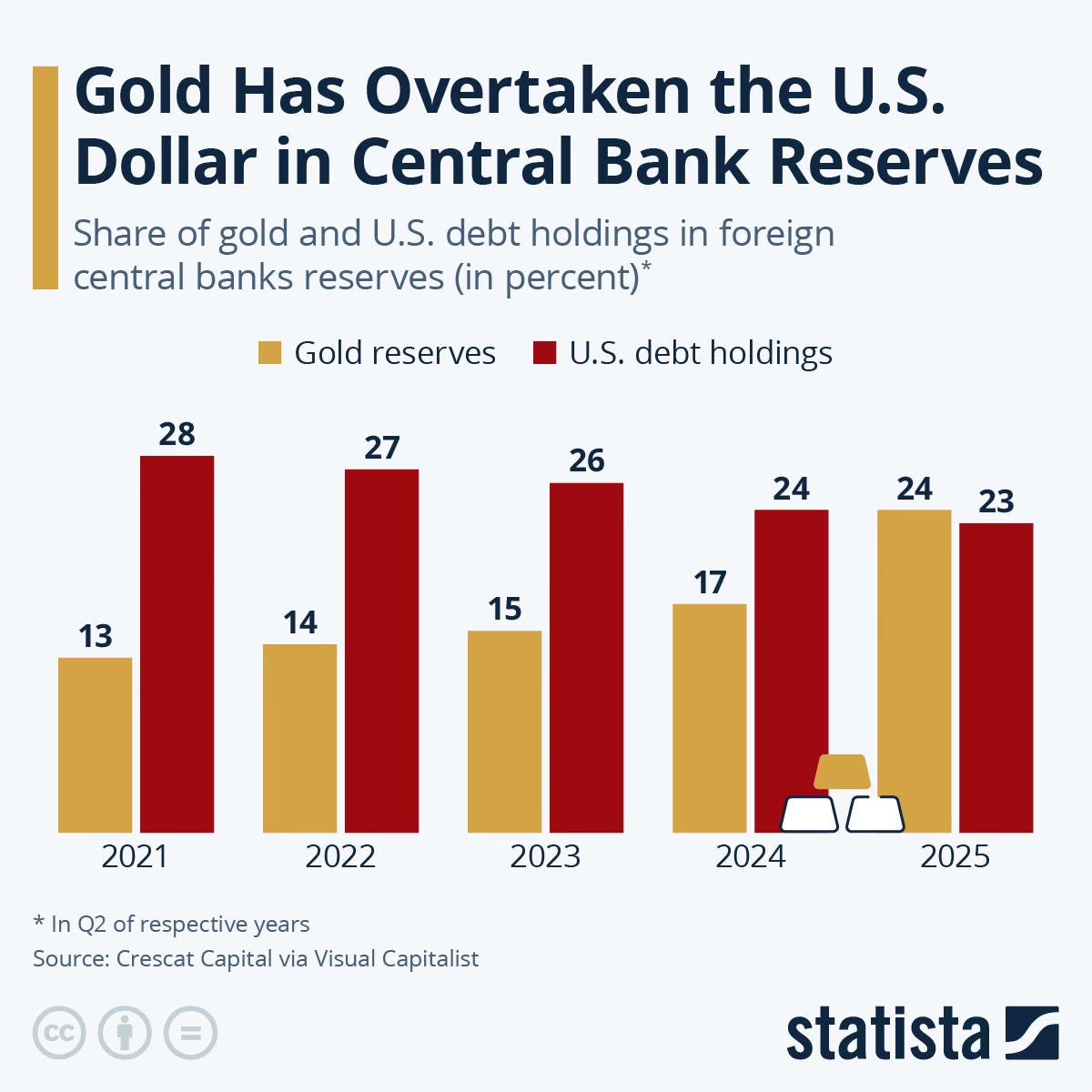
Gold sits at the centre of this shift, although not in the way most commentary suggests.
The Market Still Thinks This Is an Inflation Trade
Most investors continue interpreting gold through a familiar framework.
Inflation rises. Real yields fluctuate. Central banks diversify reserves. Markets become anxious. Gold appreciates.
It is a comfortable explanation because it belongs to an older cycle investors recognise instinctively. Gold rallies are supposed to emerge from fear, monetary easing or temporary uncertainty. Eventually confidence returns, yields rise and the cycle resets.
That interpretation increasingly misses what makes the current move unusual.
Central banks are buying aggressively despite elevated prices. Countries with persistent trade surpluses are reducing exposure to traditional reserve assets and increasing allocations toward neutral stores of value. Large-scale purchases are happening even as Western investors periodically lose interest in the trade altogether.
Historically, rising prices encouraged profit-taking.
Now they appear to encourage continued accumulation.
That behavioural change matters because it suggests the motivation is strategic rather than speculative.
Gold is being treated less like a trade and more like infrastructure.
